

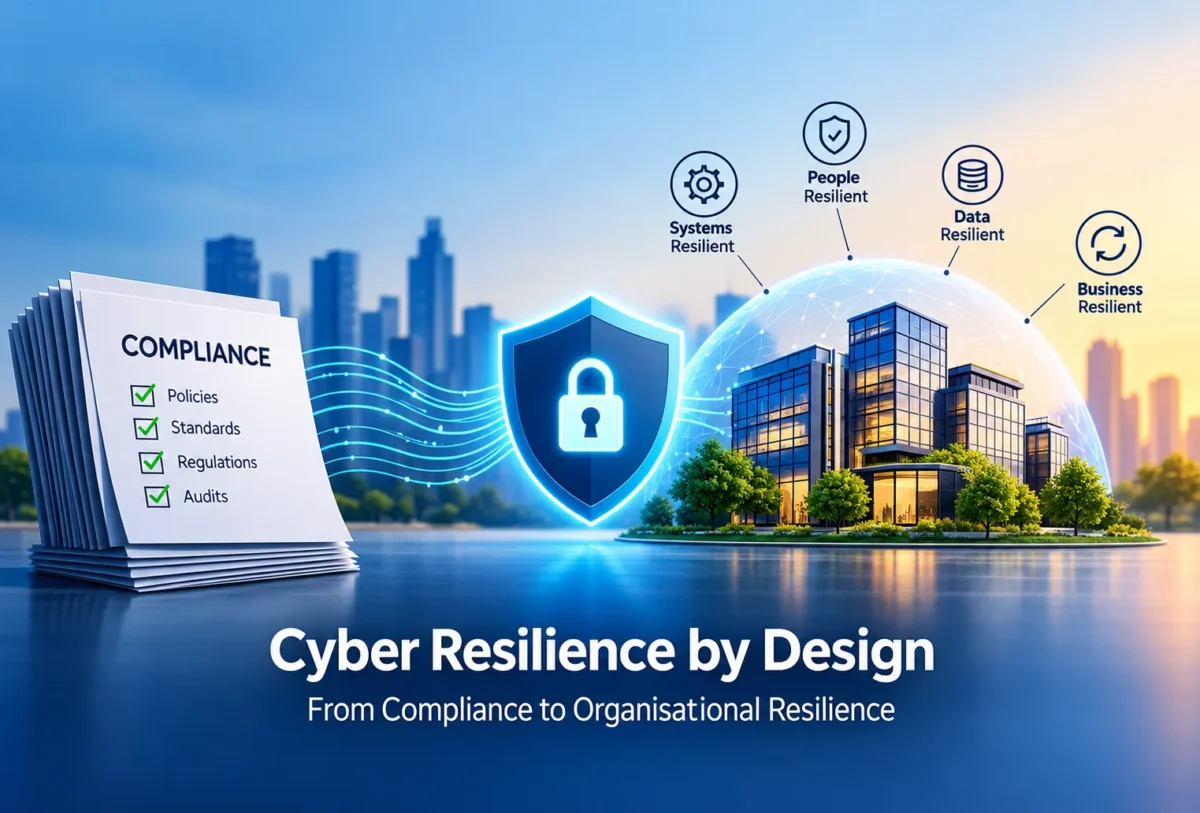
Cybersecurity is no longer only an IT responsibility, and compliance alone does not make an organisation secure. Standards and regulatory requirements provide an important foundation. But sustainable cyber resilience depends on how effectively an organisation translates those requirements into risk-based decisions, resilient technology, clear accountability and everyday operating behaviour.
Real resilience starts with leadership commitment and extends across technology, people, partners and business operations. At SYNAPLAB, our cybersecurity, privacy, compliance and digital resilience services are built around exactly this principle.
7 Priorities for a Resilient Security Organisation
1. Align Security Investment with Business Risk
Security investment should reflect the organisation’s business priorities, critical services, technology strategy and risk appetite. This is where a sound technology strategy that delivers business value makes a real difference.
The objective is not to fund every possible control. It is to understand:
- What the organisation cannot afford to lose
- Which services must remain available
- Which data requires the strongest protection
- Where risk exposure is highest
- Which investments reduce the most meaningful business risk
Security becomes more effective when investment decisions are connected to business impact. If you are questioning whether spend is paying off, read our insight on whether your technology investments are creating business value.
2. Build Integrated Security Visibility and Response
Security teams need more than isolated tools and alerts. A stronger operating model connects security monitoring, threat intelligence, identity, cloud, applications, data and response capabilities so that risks can be detected, understood and acted on quickly.
The key question is whether the organisation can identify a meaningful threat, understand its business impact and coordinate the right response. Integration at this level starts with sound digital product architecture and platform transformation, and with consolidated infrastructure, as seen in our infrastructure and cloud consolidation case study.
3. Measure What Matters
Cybersecurity reporting should help leadership make decisions, not overwhelm them with technical metrics. Useful measures can include:
- Detection and response effectiveness
- Critical vulnerability exposure
- Identity and privileged-access risk
- Recovery readiness
- Third-party exposure
- Compliance and audit readiness
- Security automation and control effectiveness
- Business continuity performance
The goal is to move from reporting security activity to reporting risk and resilience outcomes.
4. Prepare Before the Crisis
Incident response should not begin when an incident occurs. Organisations need:
- Clear roles and decision rights
- Escalation paths
- Crisis playbooks
- Communication protocols
- Technical response procedures
- Legal and regulatory coordination
- Recovery priorities
- Executive involvement
Tabletop exercises and recovery testing can expose gaps before a real event does. The objective is not only to prevent incidents. It is to be ready when prevention fails.
5. Secure the Extended Enterprise
Technology ecosystems increasingly depend on vendors, cloud providers, SaaS platforms, system integrators and strategic partners. Third-party security should therefore consider:
- Supplier criticality
- Data and system access
- Technology dependencies
- Security expectations and contractual responsibilities
- Incident notification requirements
- Continuity obligations
- Ongoing risk monitoring
The question is no longer simply whether a vendor passed an assessment. It is whether the organisation understands and can manage the dependency.
6. Strengthen the Human and Organisational Layer
Security is shaped by how people make decisions every day. Awareness programmes remain important, but resilient organisations go further by embedding security into leadership behaviour, engineering practices, access decisions, vendor management, change processes, incident learning, accountability and ownership.
This is as much an organisational design challenge as a technical one, which is why it connects closely with engineering organisation, talent and global delivery transformation. Security culture becomes stronger when employees understand not only what rule to follow, but why the risk matters.
7. Adopt Zero Trust and Continuous Improvement
Security should not assume that trust is permanent. Users, devices, workloads, applications and increasingly AI-driven systems should be continuously evaluated according to identity, context, access requirements and risk. As organisations adopt AI, data and intelligent enterprise capabilities, this continuous evaluation becomes even more important.
The same principle applies to the security programme itself. Threats change. Technology changes. Business priorities change. Security architecture, controls and operating models therefore need to evolve continuously.
From Compliance to Resilience
Compliance answers an important question: Are the required controls and obligations in place?
Resilience goes further: Can the organisation continue operating, make the right decisions under pressure, recover critical services and improve after disruption?
A mature cybersecurity programme needs both.
The Cyber Resilience Journey
- Compliance
- Risk Management
- Security Architecture
- Detection & Response
- Recovery
- Continuous Improvement
- Organisational Resilience
The SYNAPLAB Perspective on Cyber Resilience
The future of cybersecurity is not about continuously adding more security tools. It is about building organisations that can anticipate risk, protect critical capabilities, withstand disruption, respond decisively and recover effectively.
Security should therefore be treated as a business resilience capability, not simply a compliance requirement.
Secure. Resilient. Ready.
Build a More Resilient Organisation with SYNAPLAB
Whether you need to align security with business risk, strengthen incident readiness or bring senior technology leadership into the conversation, our team can help. Explore our full range of services, learn more about SYNAPLAB, or see how we have helped other organisations in our case studies. For senior leadership support, learn about our fractional CTO services.
Contact us to start a conversation about your cyber resilience strategy.